Timing
The Best Time to Visit Grutas Tolantongo
The water is the same temperature all year. What changes is the colour of the river, the size of the crowd and the state of the road — and only one of those is about weather in the ordinary sense.
In this guide
- What actually changes with the season here?
- When does the river run brown?
- When is the turquoise at its best?
- How much difference does a weekend make?
- What about Semana Santa and Christmas?
- Is it too cold in winter?
- Does the cave ever close?
- How do you read the crowd before you commit?
- Morning or afternoon in the water?
- When is Paraíso Escondido quietest?
- When does a second day earn its keep?
- Does the season change La Gloria?
- Does the season change the drive?
- Is any month the wrong month?
- Choosing a date, by what matters to you
- Is the canyon worth seeing after dark?
- When does it photograph best?
- How far ahead should you book?
What actually changes with the season here?
Not the water temperature. The pools and the river are geothermal, fed from the rock rather than the sun, which is why this is a year-round destination in a way that an outdoor swimming place at 1,280 metres otherwise would not be.
What changes is the colour of the river, the crowds, and the road. Those three are the whole of the seasonal question here, and only one of them is about weather in the ordinary sense.
When does the river run brown?
After heavy rain. Currents coming down off the mountains carry sediment into the canyon and the river turns from turquoise to brown for a stretch of days — an operator states this plainly on its own listing, which is more candour than most sources offer.
It settles when the rain does. It does not close the site and it does not spoil the pools, which are fed separately; it changes the photograph you came for. If the colour is the reason you are going, this is the fact to plan around.
When is the turquoise at its best?
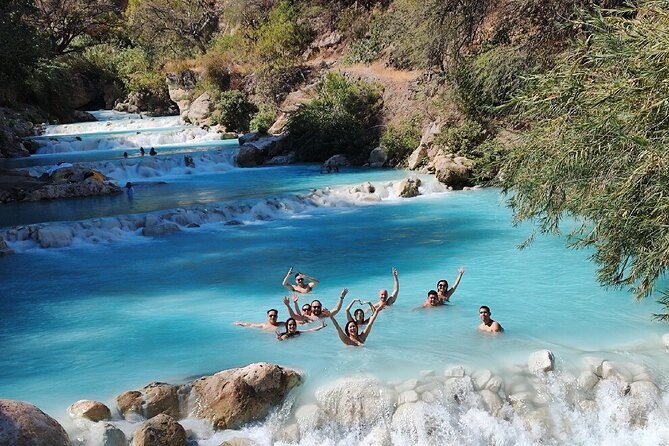
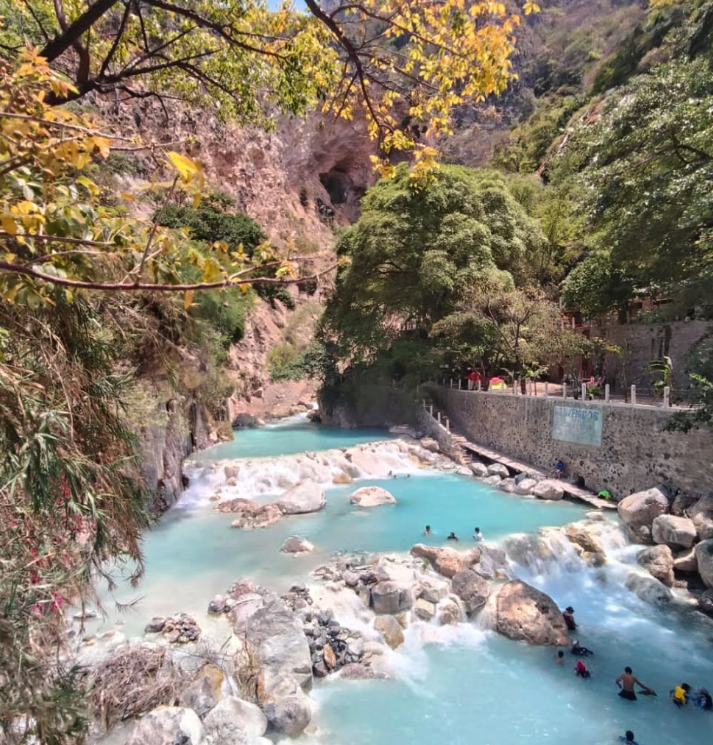
In dry weather, and after a run of it rather than a single clear day. The colour comes from lime and magnesium in suspension, so it reads at its most vivid when nothing else is being washed into the water.
Travellers who have been more than once tend to describe the dry-season colour as the difference between a good visit and the one in the photographs.
How much difference does a weekend make?
A great deal, and more than the month does. This is a domestic destination as much as an international one, and Saturday in the pools is a different experience from Tuesday in them.
A traveller who went midweek describes the river bank as sparsely used; the same stretch on a Saturday has people along the whole of it. If you have any flexibility at all, spend it here rather than on the season.
What about Semana Santa and Christmas?
Both are busy, and both are when the guided departures carry sell-out flags. Book earlier than the two or three days that suffice the rest of the year.
They are also when the fast-track entrance on one departure earns its keep: on a quiet Tuesday you would barely notice it, and on a holiday Saturday it is the difference between starting your four hours at eleven or at midday.
Is it too cold in winter?
The water is not. The air can be, and the canyon sits high enough that evenings are cooler than the afternoon suggests, so the gap between getting out of a pool and getting dry is where winter is felt.
One traveller who went in January recommended November for the weather, which is as close to a local consensus as this site has. Bring a warm layer for the drive home either way.
Does the cave ever close?
Yes. Bad weather can close access to the river and the cave, and the operators re-plan the time into other parts of the valley rather than shortening the day. One traveller reports arriving to find the cave shut and describes it as the disappointment of the trip.
The protection is the cancellation window rather than the forecast: every departure here refunds in full up to 24 hours before, so you can decide the night before at no cost.
How do you read the crowd before you commit?
There is no live occupancy figure for this canyon, so the signals worth using are indirect and they are reliable enough. The first is the day of the week: this is a domestic destination and Saturday behaves like a Saturday.
The second is the calendar. Semana Santa, the December holidays and Mexican long weekends fill the pools and fill the departures, which is why the most-booked trips carry sell-out flags at those times and have space midweek in October.
The third is the fast-track entrance. One departure goes in through a separate gate, and the value of that feature is a direct measure of how busy the day is expected to be — it is worth paying attention to on a holiday Saturday and worth nothing on a quiet Tuesday.
Morning or afternoon in the water?
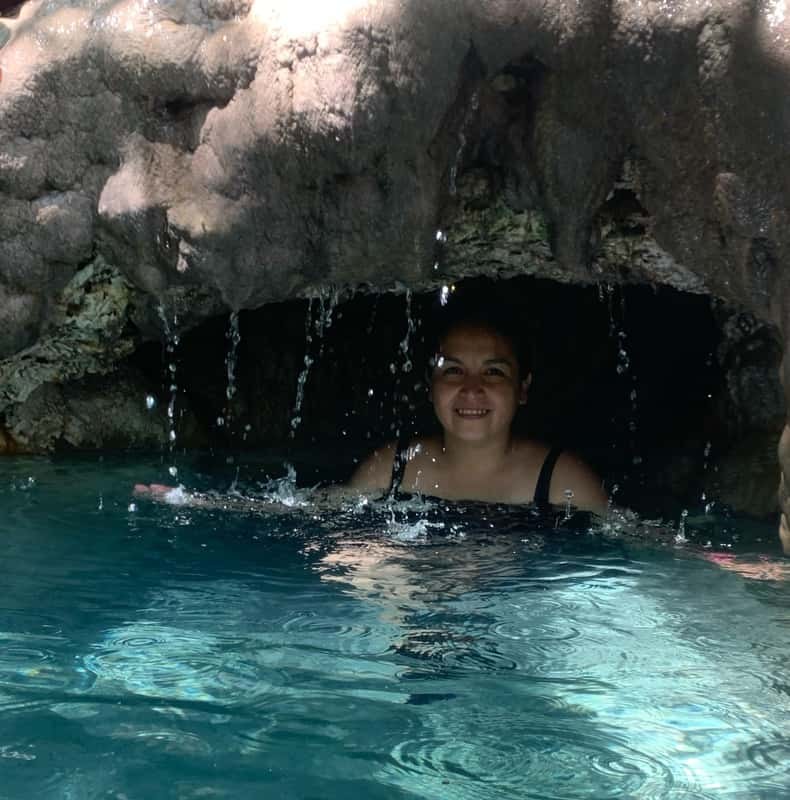
Morning in the caves, afternoon in the pools. The grotto and the steam tunnel are quietest before about eleven, because almost everybody arriving from the city walks to the terraces first.
The terraces are better later, once the day trips start leaving from about four. If you are staying over, the hours after that are the quietest the canyon gets.
When is Paraíso Escondido quietest?
Early morning and late evening, both of which are only available if you sleep in the valley. The first departures from Mexico City do not reach the gate before about half past ten.
Failing that, the answer is Las Pocitas rather than a time of day: it is quieter at any hour because reaching it takes a shuttle or a walk of about twenty-five minutes.
When does a second day earn its keep?
When you want the terraces before the city arrives, when you want Las Pocitas without watching a clock, or when La Gloria is on your list. None of the three fits into a four-hour departure and only the second fits into five.
One departure sells itself as either one day or two, which is the cleanest way to compare the question. Staying at the resort covers what is down there to sleep in.
Does the season change the drive?
The descent is twenty-three hairpin curves in any weather, and rain is the variable that matters on it. A wet descent in the dark is the least appealing version of this journey, and it is the strongest seasonal argument for booking a seat rather than driving.
The road itself is not the only consideration. Departures leave Mexico City before dawn all year, so the first hours are dark whatever the month; what changes is whether the last stretch is done in daylight on the way back. How to get to Grutas Tolantongo sets out the route.
Is any month the wrong month?
Not really, which is unusual and is worth saying plainly. The water is geothermal, so it does not have an off-season. The resort keeps the same hours every day of the week, all year.
The two dates to avoid if you can are a Saturday in a holiday week, when the pools are at their fullest, and the days immediately after heavy rain, when the river runs brown. Neither closes anything; both change what you get for a fourteen-hour day.
Is the canyon worth seeing after dark?
Only if you are staying, and then yes. The pools stay open until eleven, the suspension bridge is lit, and the terraces empty out from about four in the afternoon as the day departures leave. The water is warmer than the air, which is exactly the right way round.
The rules are posted at the entrance in Spanish and English: nobody enters the river after ten, and music and loud noise stop at eleven. Neither affects a day trip, which will be back on the road long before either.
Does the season change La Gloria?
Less than it changes the main canyon, and for a straightforward reason: fewer people go. La Gloria sits further up the valley with its own entrance, its own pools, waterfalls and viewpoints, and most day trips out of Mexico City never reach it at all.
That makes it the answer to a busy date rather than a separate seasonal question. Two departures are built around it instead of the main terraces, and one of those adds a morning of Hidalgo cooking to the day. If your only free date is a holiday Saturday, this is the version of Tolantongo worth looking at. The map of the canyon shows how far apart the two actually are.
Choosing a date, by what matters to you
| If you care most about | Aim for | Avoid |
|---|---|---|
| The turquoise colour | A dry spell, after several clear days | The days after heavy rain |
| Quiet pools | Midweek, any month | Saturdays and holiday weeks |
| The caves at their emptiest | Before 11 a.m., any day | Midday on a weekend |
| Warm evenings | Shoulder months rather than deep winter | — |
| Availability | Two or three days ahead | Semana Santa and Christmas at short notice |
| The whole valley | Two days | A four-hour departure |
What to optimise for
No month-by-month temperature or rainfall figures appear here, because none could be sourced to a named authority at the time of writing and an invented climate table would be the most confident wrong thing on the page.
When does it photograph best?
Mid-morning to early afternoon on the terraces, when the sun is high enough to reach the water and the colour reads at its strongest. The canyon walls throw long shadows early and late, which is good for the river and poor for the pools.
The aerial view everyone recognises is taken from above the terraces near the road, before the descent, and it works at any hour. The grotto and the steam tunnel are low-light in every season, which is the argument for a phone in a sealed pouch rather than a camera.
After heavy rain the river photographs brown rather than turquoise, which is the single seasonal fact that changes the pictures you come home with. The gallery shows the canyon in daylight and after dark.
How far ahead should you book?
Two or three days for most of the year. A week or more for Semana Santa, the December holidays and long weekends, when the popular departures carry sell-out flags.
Because every trip here refunds in full up to 24 hours before, booking early costs nothing and protects you against exactly the dates that go first. The questions page covers the booking mechanics in more detail.
Once you have a date, Grutas Tolantongo Tours shows which departures still have room on it and how long each one gives you in the water.
Departures that suit a date chosen carefully
The longest stay below the rim, the highest-rated day out, and the trip that adds a second valley.